Natural Diamonds
- Formed deep within the Earth
- Created through natural heat and pressure
- Recovered through mining
- Valued for natural origin and rarity
- Generally have stronger traditional resale recognition
Diamond & Gold Education
Learn how diamond quality is evaluated, understand the difference between natural and lab-grown diamonds, and discover why 14K gold is one of the most popular choices for fine everyday jewelry.
Real diamond knowledge
Lab-grown diamonds are not cubic zirconia and they are not diamond simulants. They are real diamonds with the same essential chemical composition, crystal structure, physical properties, and visual characteristics as natural diamonds.
To the naked eye, a high-quality lab-grown diamond can look identical to a natural diamond. Both are evaluated using recognized diamond grading standards, and specialized equipment is generally required to reliably identify their origin.
The primary difference is how they are formed:
Their origin, market pricing, rarity, and resale characteristics may differ, but both are genuine diamonds.
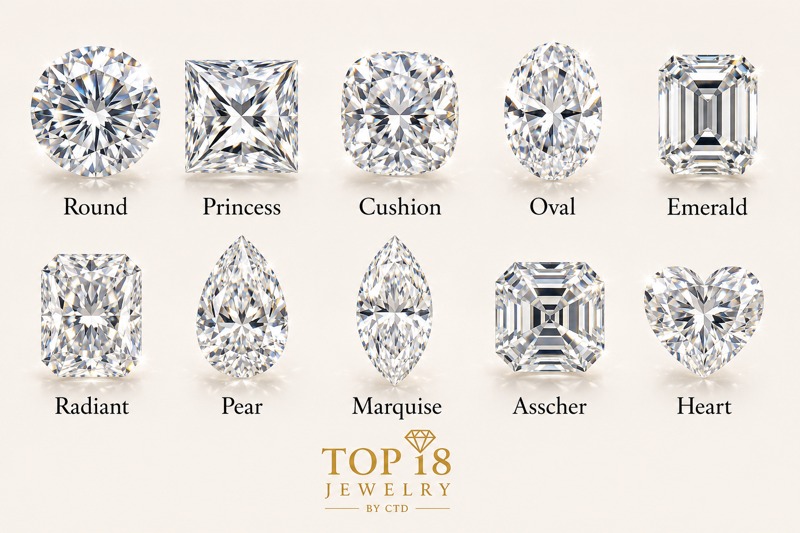
Diamond section
Compare popular diamond shapes including round, princess, cushion, oval, emerald, radiant, pear, marquise, asscher, and heart. This guide helps customers choose the look that feels right for rings, pendants, and earrings.
Visual comparison
In most cases, not with the naked eye. Natural and lab-grown diamonds can appear visually identical. Even professional jewelers and gemologists generally require specialized equipment or grading documentation to confidently determine a diamond's origin.
Both measure 10 on the Mohs hardness scale.
Both can display impressive brilliance, fire, and scintillation.
Both are composed of crystallized carbon.
Both may be evaluated by recognized grading organizations such as GIA and IGI.
Budget and sourcing
One of the main reasons customers choose lab-grown diamonds is value. Because laboratory production is less restricted by geological rarity, buyers can often select a larger or higher-quality diamond while staying within the same budget.
Some customers prefer lab-grown diamonds because their production avoids traditional diamond mining and may offer greater transparency regarding origin.
The environmental impact of a lab-grown diamond may vary depending on the energy source and manufacturing process. Natural diamonds also vary in sourcing practices. TOP18jewelry encourages customers to consider responsible sourcing, certification, quality, and personal values when comparing both options.
Many couples ultimately compare two different priorities: a smaller natural diamond valued for rarity, tradition, and natural origin, or a larger lab-grown diamond selected for visual impact and value.
Decision guide
Neither choice is automatically better. The right option depends on personal priorities, budget, symbolism, and long-term expectations.
Best suited for customers who value:
Best suited for customers who value:
At TOP18jewelry by CTD, many customers select lab-grown diamonds for earrings, pendants, and engagement rings because they can often choose a larger stone within their preferred budget. Other customers continue to prefer natural diamonds for their rarity, traditional significance, and market history. Our goal is to help each customer make an informed and confident decision.
Ask a Jewelry SpecialistDiamond quality
The 4 Cs - Color, Clarity, Cut, and Carat Weight - provide a widely recognized framework for evaluating diamond quality. Together, these characteristics influence a diamond's appearance, rarity, and value.
Color grading measures the absence of visible color in a white diamond.
D to ZD represents a colorless diamond. Grades closer to Z may show increasing yellow or brown tones.
Diamonds with less visible color can appear brighter and may allow the stone's brilliance to stand out more clearly.
Clarity evaluates internal characteristics known as inclusions and external characteristics known as blemishes.
FL to IMany inclusions are microscopic and may not affect beauty when viewed without magnification.
Diamonds with fewer visible characteristics are generally rarer.
Cut describes how well proportions, symmetry, and polish allow a diamond to interact with light.
Excellent to PoorCut strongly influences sparkle, brightness, fire, and brilliance.
A beautifully cut diamond can appear lively and impressive, even when its color or clarity grade is not the highest.
Carat measures a diamond's physical weight, not its exact visual dimensions.
1 carat = 200 mgOne carat is divided into 100 points. For example, 0.75 carat equals 75 points.
Larger diamonds are generally less common, so pricing may rise significantly as carat weight increases.
14K gold education
14K gold is a durable gold alloy made from 14 parts pure gold and 10 parts other metals. These additional metals may include silver, copper, zinc, nickel, or other suitable alloys depending on the desired color and finish.
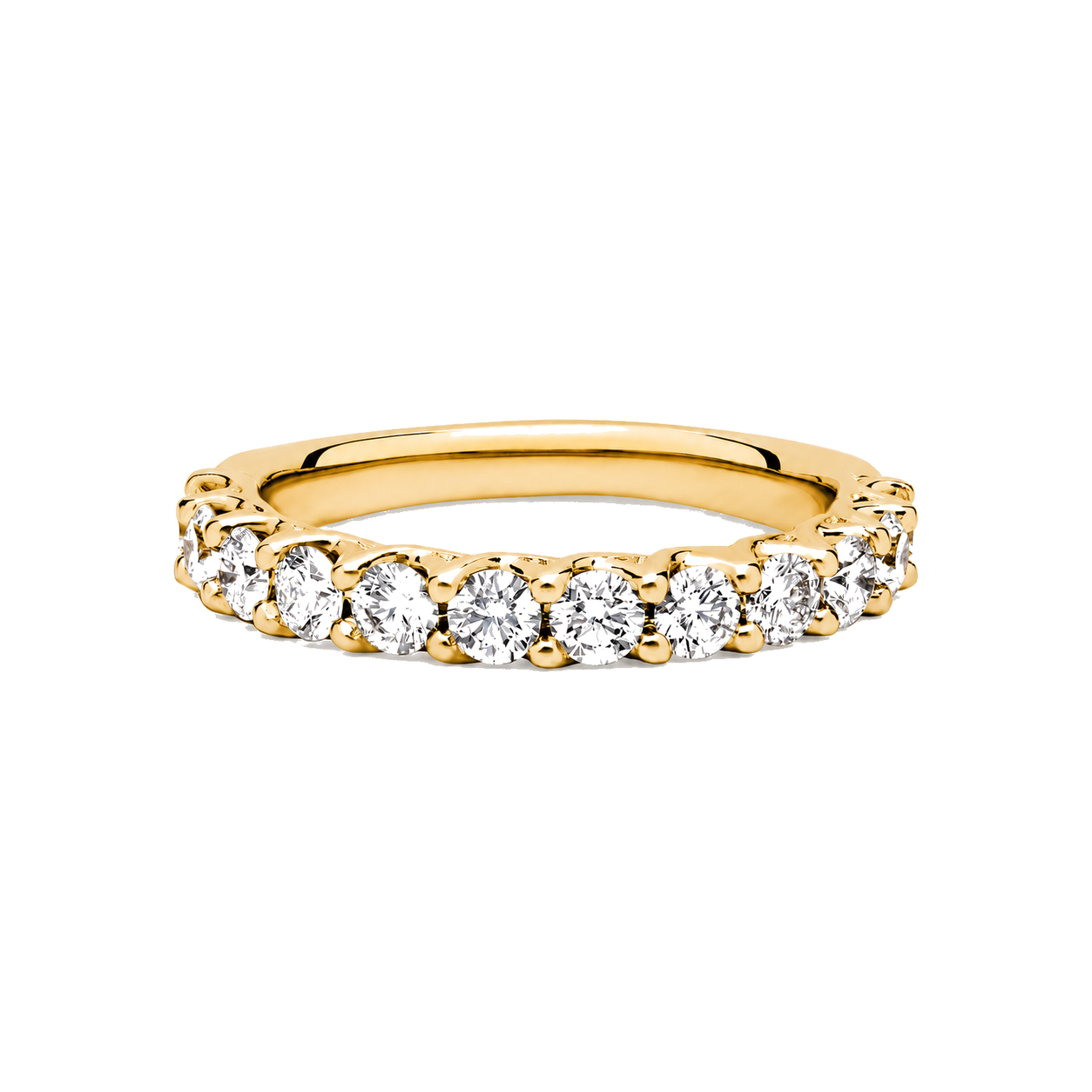
Everyday luxury
14K gold offers a practical balance of beauty, durability, and value, making it one of the most popular choices for fine jewelry and everyday luxury.
Its alloy composition makes 14K gold suitable for frequently worn jewelry.
It generally costs less than comparable 18K or 24K gold because it contains less pure gold.
It can be produced in yellow, white, and rose gold finishes.
It is widely used for engagement rings, wedding bands, earrings, pendants, necklaces, and bracelets.
Need help choosing?
Our team can help you compare diamond origins, understand the 4 Cs, explore 14K gold options, and select a piece that matches your priorities and budget.